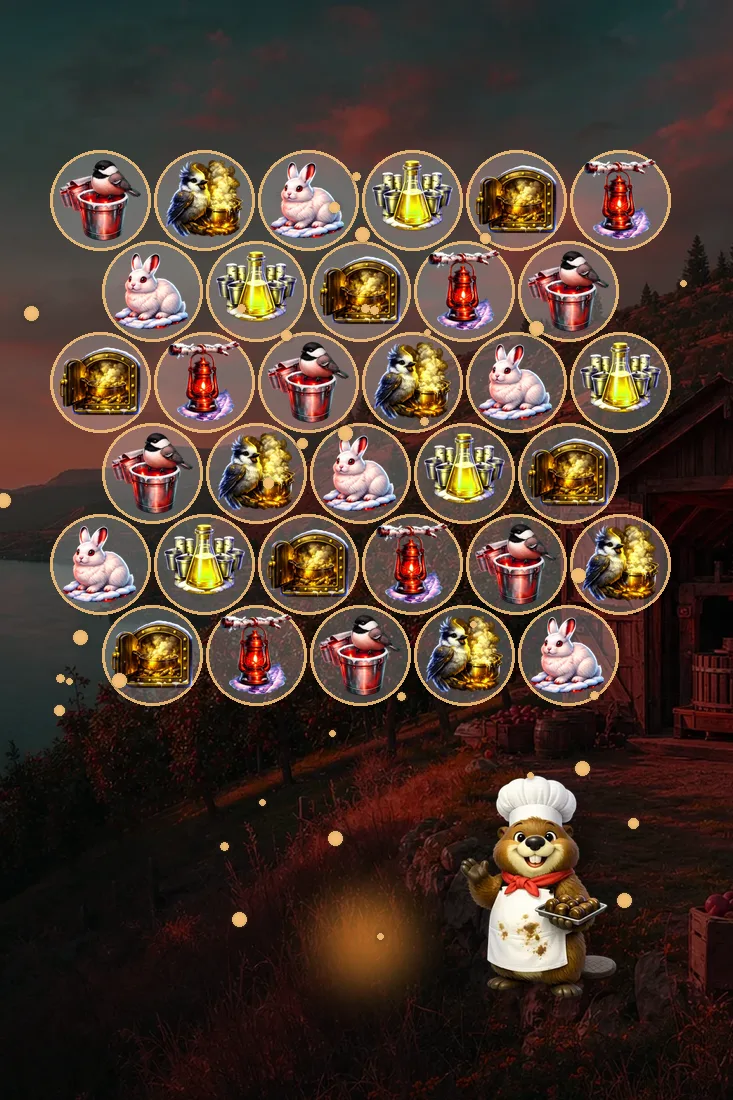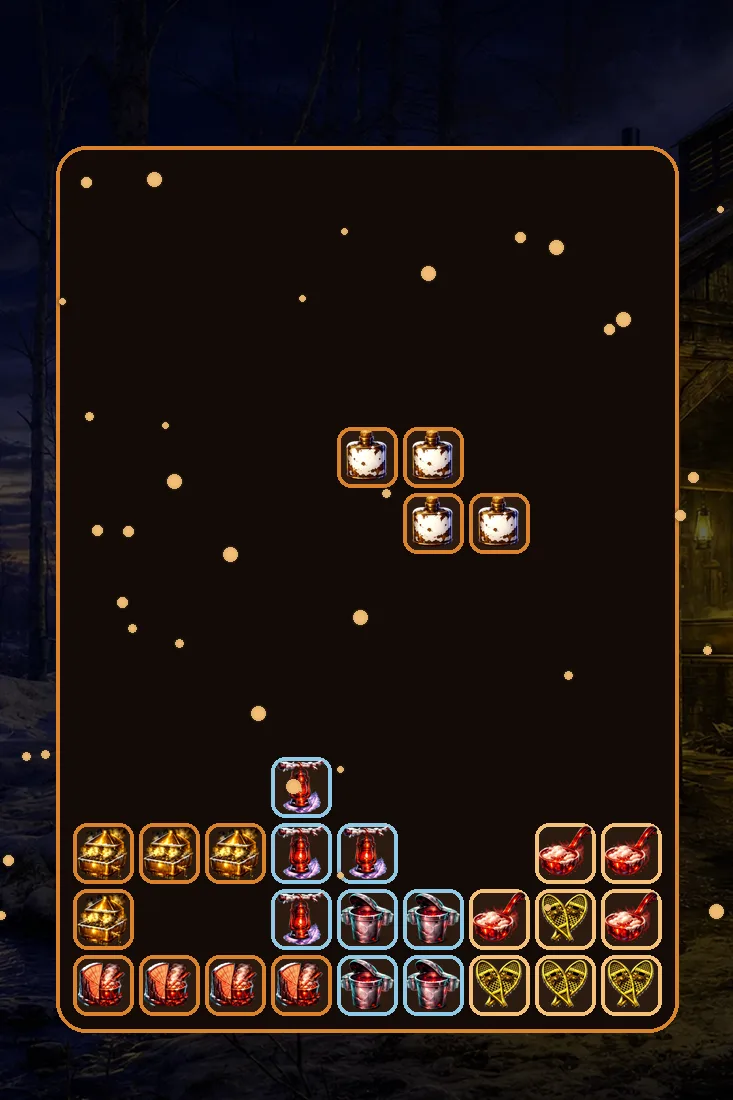
Any sugarmaker will tell you the boil is only as good as the woodpile, and a woodpile with gaps burns badly. Cordwood Drop turns that worry into a puzzle. Shapes made of four blocks fall one at a time into a well ten blocks wide and twenty tall. Each of the seven shape types wears its own sugar bush picture: split cordwood, a sap pail, snowshoes, a draw-off pan, a hand lamp, a skimming ladle and an enamel flask.
Turn and shift each piece as it falls, then let it settle or slam it straight down. Fill a row from wall to wall and it clears away, dropping everything above it. A faint ghost outline shows exactly where the current piece will land, a queue shows what is coming next, and a hold tray lets you set one piece aside for a better moment. Every ten cleared lines, the level rises and the pieces fall faster.
How to play Cordwood Drop
- Press Play and the first shape starts falling into the top of the woodshed well.
- Move it left or right and turn it until it lines up with a gap in the stack below.
- Watch the ghost outline at the bottom of the well; it marks exactly where the piece will settle.
- Let it fall, nudge it down faster, or drop it instantly once you are happy with the position.
- Fill complete rows to clear them, and keep the stack low as the speed climbs every ten lines.
Cordwood Drop controls
Getting better at Cordwood Drop
- Keep the top of your stack fairly flat; jagged peaks leave awkward holes that only one shape can fill.
- Leave one column open along a wall and save the long straight shape for clearing several rows at once.
- Use the hold tray for that long piece, so it is ready the moment your open column is deep enough.
- Check the next queue before placing the current piece; knowing what follows turns guesses into plans.
- Trust the ghost outline at higher speeds and drop instantly rather than watching each piece fall.
A woodpile with no gaps
We kept the classic falling-block idea intact and spent our effort on the feel. Pieces slide smoothly, turns respond immediately, and each block is a rounded tile with a sugar bush picture on it, so a cleared row looks like a well-stacked cord of wood rather than a stripe of colour.
The pictures also help your eye. After a few minutes you stop thinking of shapes by their outline and start recognizing them by their image: the snowshoes piece, the lamp piece, the ladle piece. That tiny shortcut makes decisions faster when the well is filling up and the next queue is crowded.
The hold tray, the ghost and the climbing pace
Three helpers make Cordwood Drop feel fair. The ghost outline removes guesswork about where a piece will land, which matters more and more as the speed rises. The next queue lets you plan a move or two ahead. The hold tray is the clever one: press it and the current piece steps aside, ready to swap back in later.
The pace rises in clear steps. Every ten lines you clear, the level goes up by one and pieces start falling a little faster. Early levels give you time to admire your stack; later ones ask for quick reads and instant drops. Because the jump only comes every ten lines, you can tidy up before it arrives.
Questions about Cordwood Drop
The well is ten blocks wide and twenty blocks tall. Every piece is made of four blocks, and there are seven different shapes in total.
Each time you clear ten lines, the level rises by one and the pieces start falling faster, so the climb is steady and easy to see coming.
Yes. Big left, right, rotate, down and drop buttons sit beneath the well, and you can also swipe across the stage to move and drop pieces.